
When removal work is described as confidential, you should know what that actually covers. Here is how it works in practice, and what to ask.
Confidentiality means a provider limits who sees your information, shares only what is necessary with platforms and does not disclose your case to others.
Some details must be shared to get content removed, such as links and sometimes proof of ownership. A good provider explains what is shared and why.
Confidential does not mean invisible. Some parts of the process, such as notices to platforms, involve third parties. What it should mean is that your information is shared only where needed, with your knowledge, and never used for marketing.
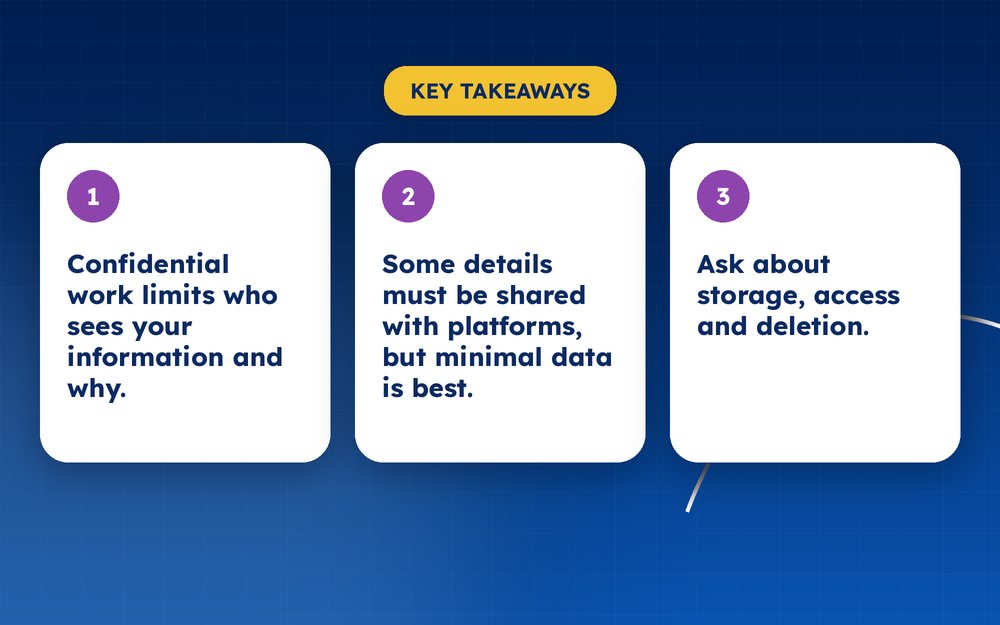
- Confidential work limits who sees your information and why.
- Some details must be shared with platforms, but minimal data is best.
- Ask about storage, access and deletion.
What to expect, step by step
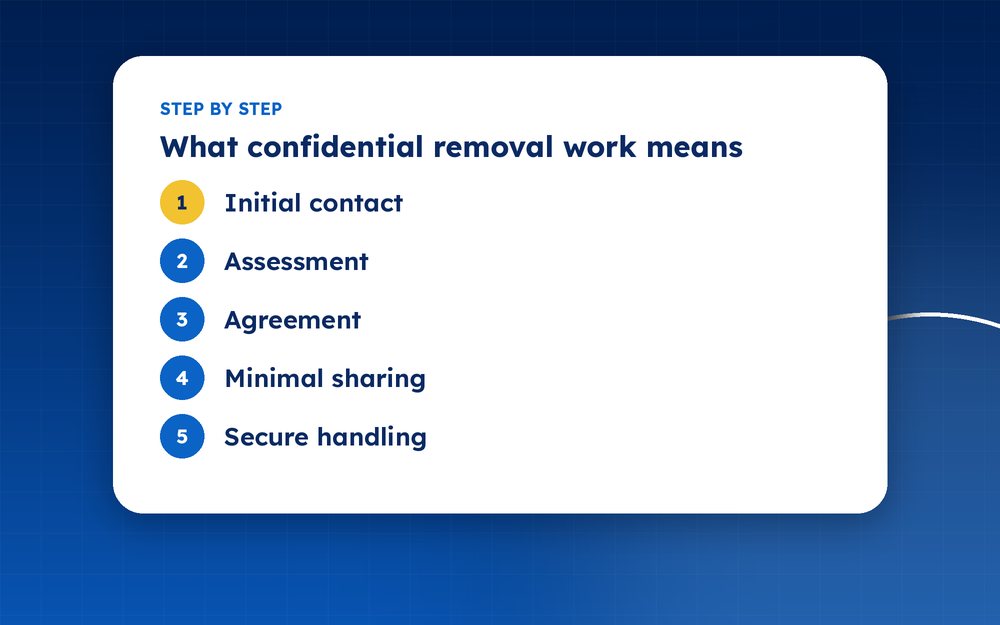
- Initial contactYou share a brief summary and links. At first you share the minimum: a short summary and links. Nothing more is needed to get an honest assessment.
- AssessmentThe provider reviews and tells you what is realistic. The provider reviews and tells you what looks possible, what looks hard and what they will need.
- AgreementYou review the terms, including confidentiality. The agreement should say how your information is handled, who can see it and when it is deleted. Read it before you agree.
- Minimal sharingOnly necessary details are sent to platforms. Notices usually include links, a description of the issue and contact details. The provider should send only what is needed.
- Secure handlingInformation is stored securely and accessed only by those who need it. Files and notes should be kept in secure systems and accessible only to the people working on your case.
- Progress updatesYou receive updates without exposing details publicly. Updates should come through private channels, such as email to you, without naming your case publicly.
- DeletionData is deleted according to the agreement. When the work is over, ask for deletion and confirmation. If there is ongoing monitoring, agree what is kept.
What is shared with platforms
Notices usually include the links, a description of the issue and contact details. Some platforms ask for identification. A provider can often act as your representative, reducing what you must share directly.
What stays private
Your case details, files and identity should not be shared beyond what is needed. A provider should not publish case studies or use your information without permission.
Limits of confidentiality
Platforms may forward notices to uploaders, and notices can be published in transparency databases. Providers should tell you about these risks.
Questions to ask
Ask where data is stored, who has access, whether subcontractors are used and how long data is kept.
What a typical case looks like
A professional hires a provider to remove private images. The provider tells her which details must appear in notices, such as the links and a short description, and which will not. A platform asks for identity proof, and the provider explains what is needed and helps her redact the rest. After the case is finished, the provider confirms deletion of her files in writing.
Each step was explained before it happened, which is what confidentiality looks like in practice.
Common mistakes to avoid
Do not assume confidentiality covers everything. Do not skip the terms. Do not share more than needed. And do not ignore risks of notice publication.
How a specialist can help
We keep client work confidential and explain what must be shared with platforms. Email us in confidence, and we will explain how we handle your information.
Frequently asked questions
Will the uploader see my name?
Some platforms forward notices to the uploader, which can include contact details. Ask how your details will be handled, and whether a representative can be used.
Are removal notices public?
Some platforms publish notices in transparency databases. A provider should tell you this before sending.
Do you share my case with others?
A reputable provider does not, apart from what is needed to submit notices, and never uses your case for marketing without permission.
How long is my data kept?
Ask the provider. A reasonable answer is only as long as needed, then deletion on request.
Can I stay anonymous?
Often partly. It depends on the platform and the type of report.
Is this legal advice?
No. It is general information. For privacy rights, speak to a qualified lawyer.
Need help with this?
Every situation is different. Email us the details in confidence and we will reply with an honest assessment of what can be done.
Contact us by email How it worksThis guide is general information, not legal advice. DMCA Reputation is not a law firm.
Related guides
Why Some Removal Requests Are Rejected and What to Do Next
Why some removal requests are rejected and what to do next: common reasons, how to read a rejection, how to strengthen a request and when to try another route.
Read the guide · 3 min
How Long Does a DMCA Takedown Really Take?
How long does a DMCA takedown really take? Typical timelines for platforms, hosts and search engines, what slows things down and how to speed it up.
Read the guide · 4 min
How Much Does Review or Content Removal Cost?
How much does review or content removal cost? What drives the price, how providers charge and questions to ask before hiring.
Read the guide · 3 min