
A deepfake of an executive or public figure can move markets, mislead customers or damage trust within hours. A calm, prepared response is the difference between a contained incident and a crisis.
Deepfakes of leaders are used for scams, fake endorsements, false statements and harassment. The response has two halves: remove the content, and communicate with the people who may have seen it.
This guide is general information, not legal advice. For serious incidents, involve legal counsel and, where fraud is involved, the police.
Speed and consistency matter most. A fake video of a leader can move markets, mislead staff and harm customers within hours, so a calm plan with a named lead and a short statement is essential.
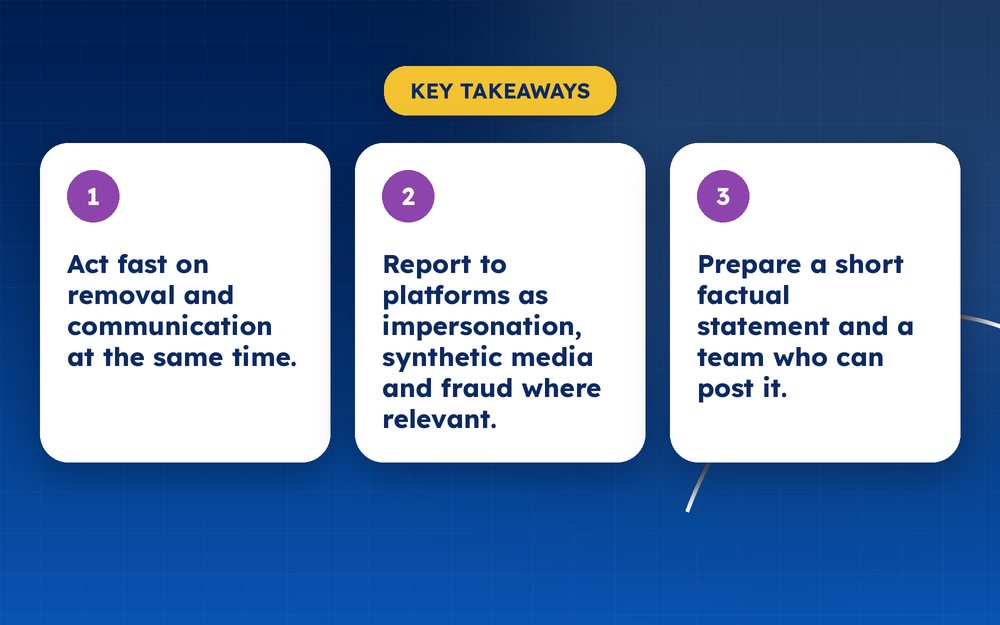
- Act fast on removal and communication at the same time.
- Report to platforms as impersonation, synthetic media and fraud where relevant.
- Prepare a short factual statement and a team who can post it.
Response plan, step by step
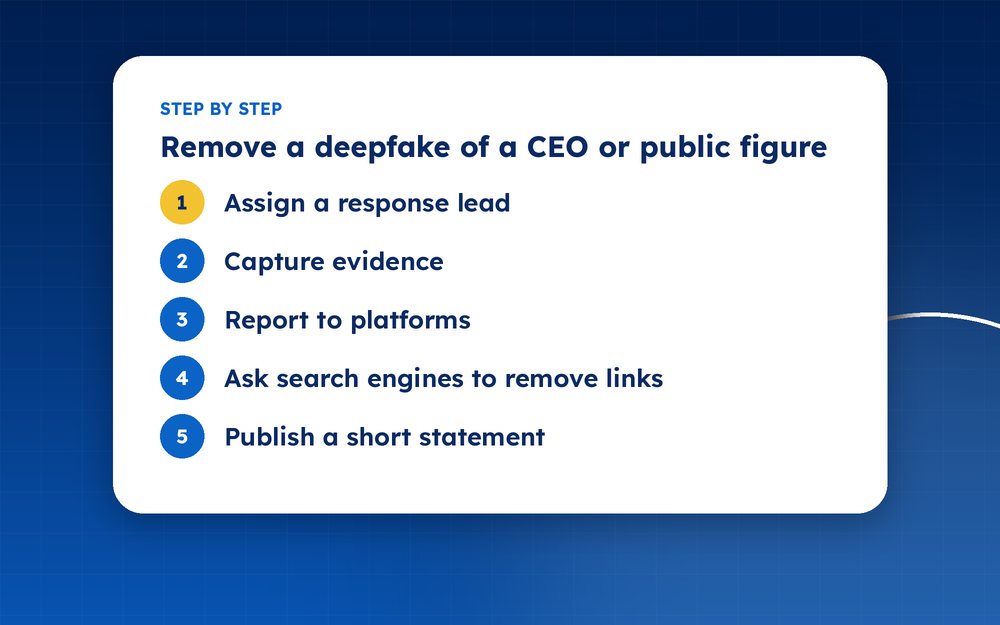
- Assign a response leadOne person coordinates, and legal, communications and security are looped in. Name one person to coordinate, with deputies. Decide who speaks to staff, media and investors.
- Capture evidenceSave links, screenshots, timestamps and account names of everywhere the fake appears. Save links, versions and screenshots. Note where it appears, how it spreads and who shares it.
- Report to platformsUse impersonation, synthetic media and fraud routes. Mention the person's identity and, for companies, the brand. Report to each platform as impersonation, manipulated media or fraud, as appropriate. Be clear that the video is fake.
- Ask search engines to remove linksWhere the content is sexual or otherwise falls within policies, submit removal requests. Ask search engines to remove links, particularly if the fake is used in scams.
- Publish a short statementPost on your official channels that the content is fake and where to find real information. Publish a short, factual statement on your website and official channels that the video is fake. Keep it brief.
- Warn key contactsTell staff, customers and partners if the fake could mislead them or be used for fraud. Tell key partners, staff and customers directly, with a clear message about what to ignore.
- Consider legal and police actionIf there is fraud, market impact or harassment, involve counsel and the police. If the fake is used for fraud or threats, involve the police and a lawyer.
Who needs to know
Staff, customers, investors and partners may all see the fake. A short internal message that explains what is fake, what is real and what to do if contacted helps. If scammers use the fake to ask for payments, warn finance teams and customers to verify requests through known channels.
Balancing removal and attention
A loud response can spread a fake further. Aim for a clear, brief statement on your own channels and quiet, firm reports to platforms. Avoid repeating the content in your statement.
Preparing before it happens
Agree a response plan, nominate contacts at major platforms where possible, and keep a bank of real recordings and statements. Train staff on verifying unusual requests, because deepfake audio and video are increasingly used in payment fraud.
What a good first hour looks like
In the first hour, capture evidence, report the highest-reach copies and tell your internal response lead. In the next few hours, publish a short statement, brief staff and customers and file search engine requests. By the end of the day, you should have a list of every link found, the status of each report and a plan to monitor. Reviewing and updating that list daily for a week keeps the incident under control.
Afterwards, hold a short review: what spread fastest, which reports worked and what you would change in the plan.
What a typical case looks like
A company learns that a fake video of its CEO announcing a bogus giveaway is circulating on social media. A lead is appointed within the hour. The team captures evidence, reports each post as impersonation, and publishes a short statement on its official channels. Platforms remove most copies within a day. Staff and partners receive a direct message, and the police are told about the scam.
Preparation and a single decision maker made the response fast.
Common mistakes to avoid
Do not wait for certainty before reporting. Do not forward the fake internally. Do not respond emotionally on social media. And do not leave search and platform reports until the incident is over.
How a specialist can help
When a fake is spreading, speed and coordination matter. A specialist team can run the platform reports, search removal and monitoring while your leaders handle communication. We are not a law firm and cannot give legal advice, but we can handle the practical work. Email us in confidence.
Frequently asked questions
Can a deepfake of a CEO be removed?
Often yes. Platforms treat manipulated media used for fraud or impersonation seriously, and respond to clear reports.
Should we publish a statement?
A short, factual statement on official channels usually helps, especially if the fake is spreading.
How fast should we act?
Within hours. Speed limits spread.
Do we need the police?
If it is used for fraud, threats or market manipulation, yes.
How do we prepare?
Have a plan, a lead and templates in advance.
Is this legal advice?
No. It is general information, and laws differ by country. For claims or court action, speak to a qualified lawyer.
Need help with this?
Every situation is different. Email us the details in confidence and we will reply with an honest assessment of what can be done.
Contact us by email Deepfake removalThis guide is general information, not legal advice. DMCA Reputation is not a law firm.
Related guides
What to Do If Your Face Is Used in a Fake Ad or Scam Endorsement
What to do if your face is used in a fake ad or scam endorsement: report to the ad platform, warn followers, remove copies and protect your reputation and your audience.
Read the guide · 4 min
How to Protect Your Photos From Being Used for AI Nudes
How to protect your photos from being used for AI nudes: privacy settings, sharing habits, watermarks, monitoring and what to do fast if a fake appears.
Read the guide · 4 min
How to Remove Deepfakes of Yourself
How to remove deepfakes of yourself: documenting evidence, platform reports, search removal and legal options for AI-generated fake images and videos.
Read the guide · 4 min