
Review extortion is real: someone threatens a bad review unless you pay, refund or give something extra. Paying rarely ends it, and a clear response protects you.
Some people use the threat of bad reviews to get discounts or refunds. Others escalate to demanding money. Platforms have rules against reviews used to extract benefits, and in many places extortion or blackmail is a criminal offence.
Your response should separate genuine complaints, which deserve a fair resolution, from threats that cross a line.
This is a demand with a threat attached, and it is different from a normal complaint. Staying calm and keeping everything in writing protects you.
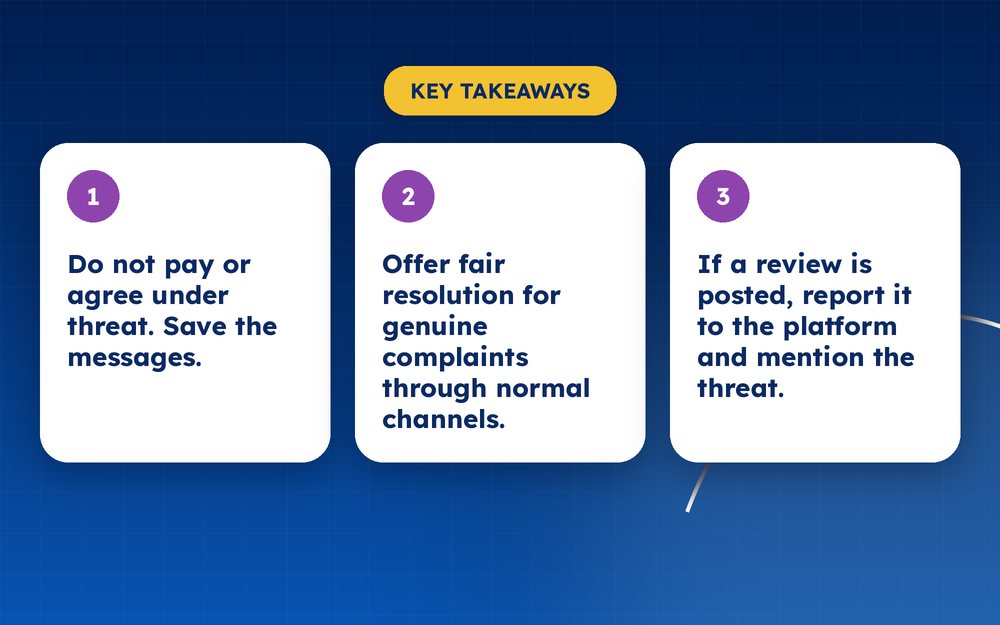
- Do not pay or agree under threat. Save the messages.
- Offer fair resolution for genuine complaints through normal channels.
- If a review is posted, report it to the platform and mention the threat.
What to do, step by step
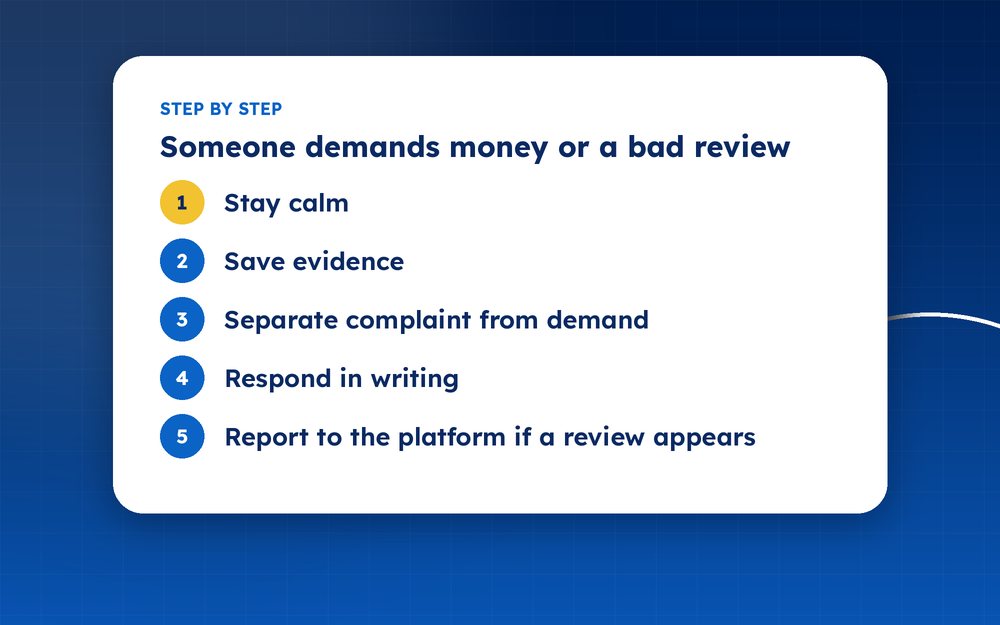
- Stay calmDo not reply in anger. Take time to think. Do not reply in anger or panic. Take time to read what has been said.
- Save evidenceScreenshot messages, emails and call logs, with dates. Save messages, emails, call logs and any booking details. Keep copies safely.
- Separate complaint from demandDecide whether there is a genuine issue that deserves a fair response. Separate the complaint, which you can address, from the demand for money with a threat, which you should not accept.
- Respond in writingOffer to handle genuine issues through normal channels, and say that you do not respond to threats. Reply briefly in writing, offering to resolve any genuine issue through your normal process and declining to pay for silence.
- Report to the platform if a review appearsFlag it as extortion or conflict of interest and attach your evidence. If a review appears, report it with your saved messages, as it may break policy on coercion.
- Consider the policeThreats for money may be a criminal offence. Ask what steps are possible. If the threats continue or are serious, report to the police and keep records.
- Keep recordsNote the dates of any reports and replies. Write down dates and details while they are fresh.
Why paying does not work
Paying shows that threats work, and can lead to repeat demands. It can also breach platform rules if the review is changed in return for payment. A fair refund for a genuine issue is different: that is customer service, not a payoff.
What platforms say
Most platforms prohibit reviews posted in exchange for payment or as leverage. A report that includes the messages showing the demand is persuasive evidence.
Writing a firm reply
A short reply to the threat can say that you are happy to resolve genuine concerns through your complaints process, but you will not respond to demands. Keep it neutral, and keep a copy.
If it escalates
If the person harasses you or your staff, or threatens more, speak to the police and consider legal advice.
What a typical case looks like
A restaurant owner receives a message saying a guest will leave a bad review unless the meal is refunded and extra compensation is paid. She saves the message, replies that she will gladly review any genuine complaint but will not pay to avoid a review, and offers a standard refund process. A one-star review appears the next day. She reports it with the saved message, and it is removed.
Her written record showed the review was part of a demand.
Common mistakes to avoid
Do not pay in secret. Do not threaten back. Do not delete messages. And do not reply with new offers under pressure.
How a specialist can help
A specialist team can help prepare reports with the right evidence and follow up with platforms. We are not a law firm and cannot give legal advice. Email us in confidence.
Frequently asked questions
Should I pay to avoid a bad review?
Usually not. Paying can encourage more demands. Offer to resolve genuine issues through your normal process.
Is a threat of a bad review illegal?
It depends on the facts and the place. Serious threats or repeated demands may be offences. The police or a lawyer can advise.
Can I report the review?
Yes, if it appears. Provide your saved messages.
What if the person is a real customer?
Treat the complaint fairly, but do not accept coercion.
Should I tell the police?
If threats are serious or repeated, yes.
Is this legal advice?
No. It is general information, and laws differ by place. For claims or court action, speak to a qualified lawyer.
Need help with this?
Every situation is different. Email us the details in confidence and we will reply with an honest assessment of what can be done.
Contact us by email Google review removalThis guide is general information, not legal advice. DMCA Reputation is not a law firm.
Related guides
What to Do When a Competitor Is Attacking Your Reviews
What to do when a competitor is attacking your reviews: spot the signs, gather evidence, report to platforms, protect your profile and consider legal and regulatory routes.
Read the guide · 3 min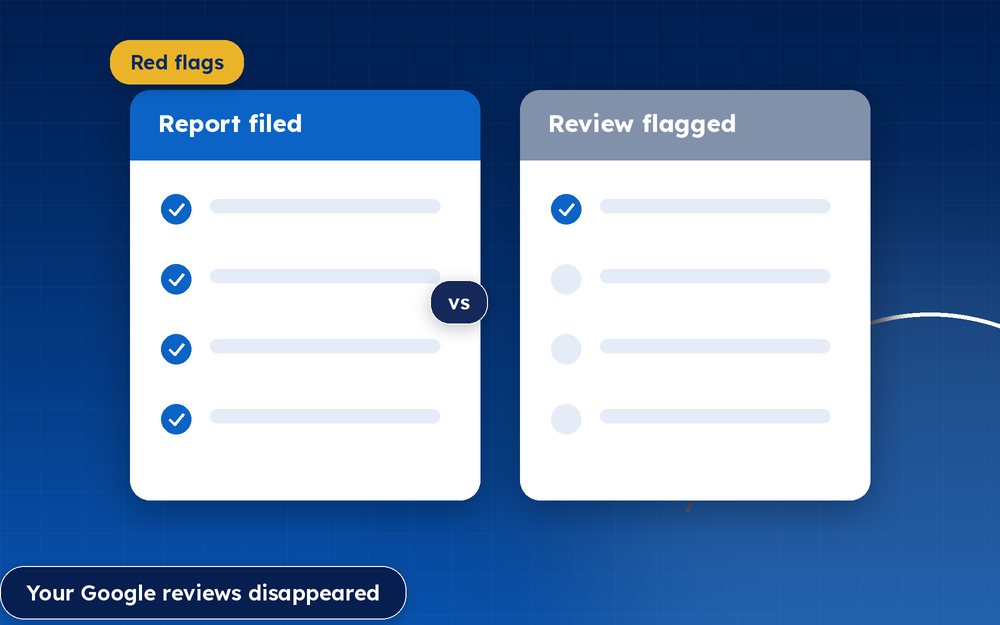
Why Your Google Reviews Disappeared and How to Get Them Back
Why your Google reviews disappeared and how to get them back: spam filters, profile changes, suspensions, policy removals and the steps to request restoration.
Read the guide · 3 min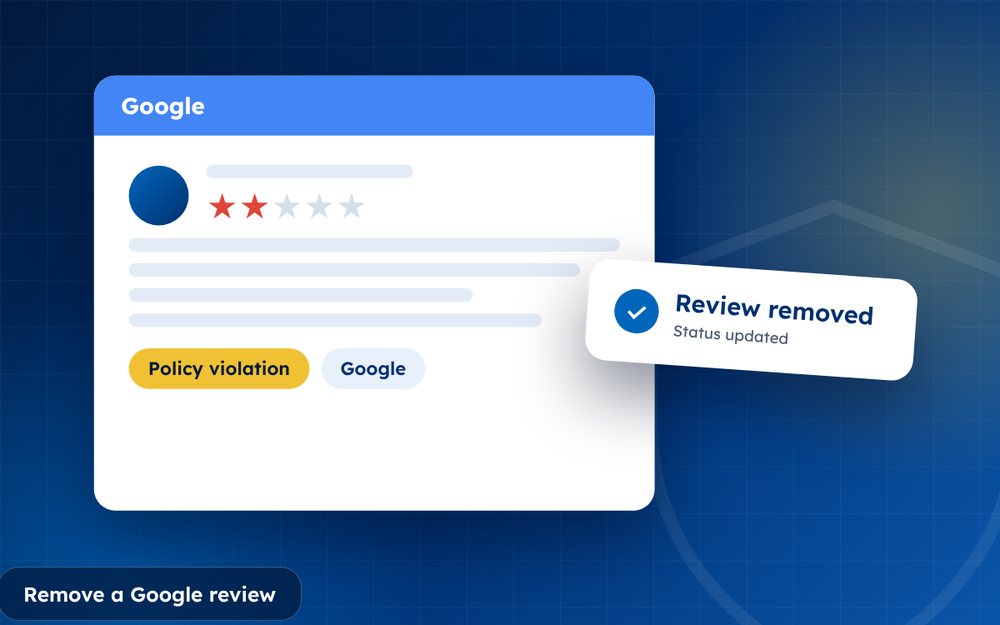
How to Remove a Google Review: A Complete Guide for Business Owners
How to remove a Google review: what Google will remove, how to report it, how to appeal and what to do if it stays. A guide for business owners.
Read the guide · 6 min