
People dealing with leaks or bad reviews are often targeted by scammers. Know the warning signs.
People who are dealing with leaks, harassment or damaging reviews are often scared, tired and in a hurry. Scammers know this. They create fake removal services, pose as officials and pressure victims into paying for things that never happen.
Knowing the common patterns makes it much easier to protect yourself.
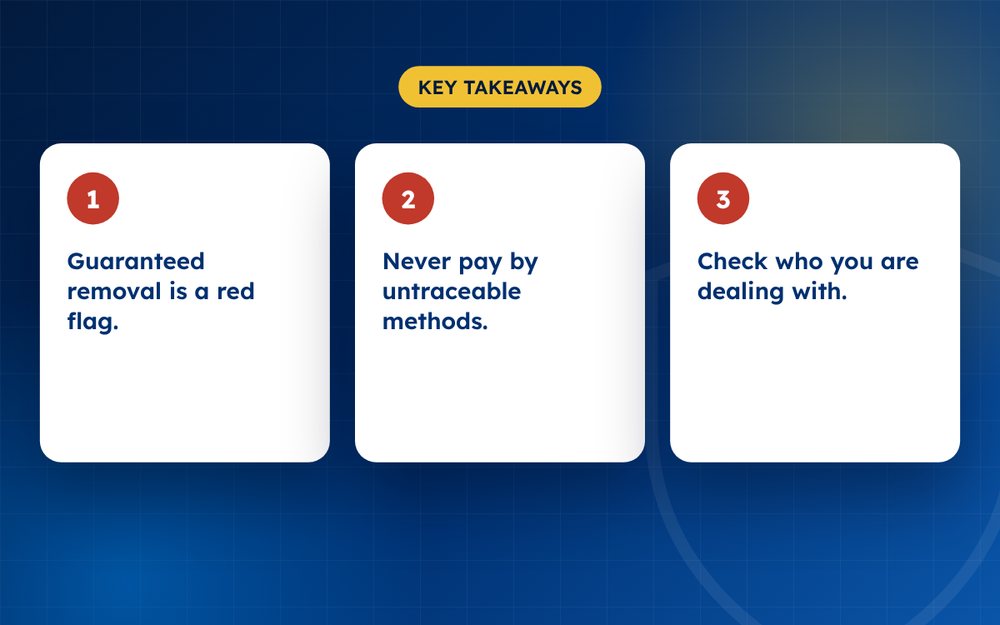
- Guaranteed removal is a red flag.
- Never pay by untraceable methods.
- Check who you are dealing with.
Common scams
- Fake services promising guaranteed removal
- Scammers who contact you after a leak
- Fake law firms or agencies
- Sites that charge to remove your listing then repost it
- Payment through gift cards or crypto only
How to protect yourself
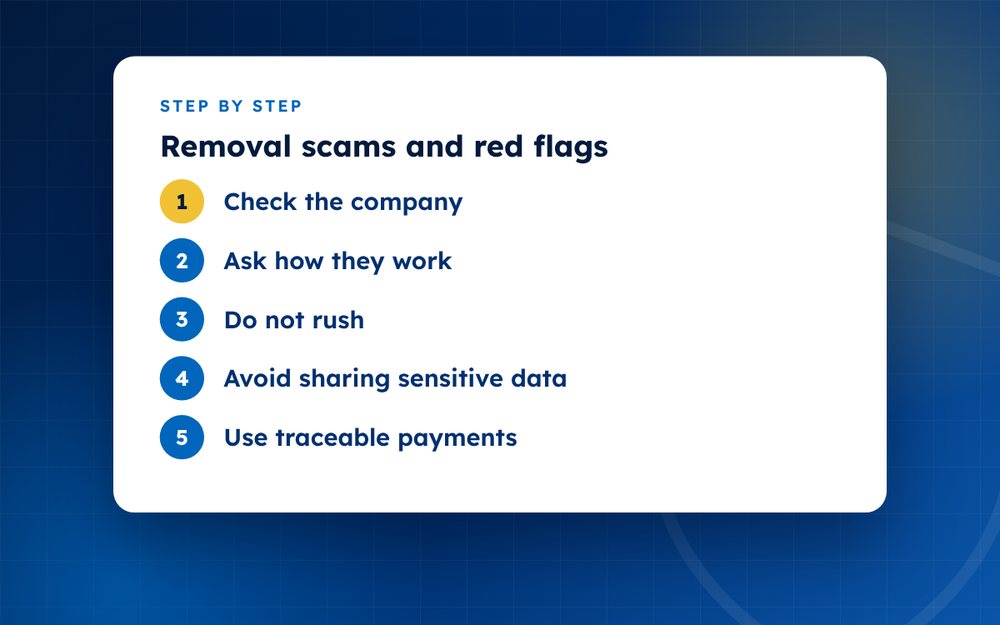
- Check the companyLook for a real website, address and reviews.
- Ask how they workClear explanations are a good sign.
- Do not rushPressure is a tactic.
- Avoid sharing sensitive dataNever share passwords.
- Use traceable paymentsAvoid gift cards and anonymous transfers.
- Report scamsTell your local fraud authority.
Common scams
- Services that promise guaranteed removal and disappear after payment
- People who contact you after a leak, claiming they can fix it for a fee
- Fake law firms or agencies that ask for payment upfront
- Websites that charge to remove content that they themselves posted or copied
- Offers to remove reviews by unofficial or illegal means
- Requests for payment by gift card, cryptocurrency or wire transfer only
Warning signs
- Unsolicited contact right after something bad happens
- Pressure to pay quickly
- Vague explanations of how the work will be done
- No clear company details or contract
- Requests for passwords or access to your accounts
- Guarantees of results
How to protect yourself
Verify the company. Look for a real address, a working website, clear terms and independent reviews. Do not share passwords. Use payment methods that can be traced and disputed. Take time before you decide, and ask a trusted person for advice. If you receive unsolicited offers, ignore them or report them.
If you have been scammed
Stop paying, keep records and contact your bank or payment provider. Report the scam to your local fraud authority and to the platform where it happened. Change passwords if you shared access. Tell friends and family, so that they do not fall for the same trick. Being scammed is not your fault.
If you are contacted out of the blue
Do not reply. Do not click on links or open attachments. Take a screenshot and report the message to the platform or your email provider. If the message is about a real incident, check the facts independently and contact a trusted adviser. A genuine service will not mind you taking time.
Talking about it
Scams succeed partly because victims feel embarrassed. Talk to someone you trust and report what happened. The more people know about these tactics, the less effective they become.
If you are unsure about an offer, email us and we will give an honest view.
Frequently asked questions
Why do scammers contact victims?
Because victims are vulnerable and motivated to act. Scammers monitor leaks, complaints and public posts, then reach out with offers. They rely on fear and urgency.
Is any removal guaranteed?
No. Platforms, hosts and courts make the decisions. Honest providers can improve your chances but cannot promise results. Anyone who guarantees removal is misleading you.
Is it safe to pay in advance?
Be cautious. Some legitimate providers ask for a deposit, but only against a clear written scope. Avoid paying the full amount in advance, and never pay by untraceable methods.
What if I already paid?
Contact your bank or payment provider as soon as possible, keep records and report it. Do not send more money to recover the first payment, because that is a common follow-up scam.
How can I check whether a service is real?
Look for transparent company details, a contract and consistent reviews on independent sites. Ask questions about methods and costs. Trust your instincts if something feels wrong.
Who can I report scams to?
Your national fraud authority, your bank and the platform involved. Reporting helps others and may assist investigations.
Need help with this?
Every situation is different. Email us the details in confidence and we will reply with an honest assessment of what can be done.
Contact us by email How it worksThis guide is general information, not legal advice. DMCA Reputation is not a law firm.
Related guides
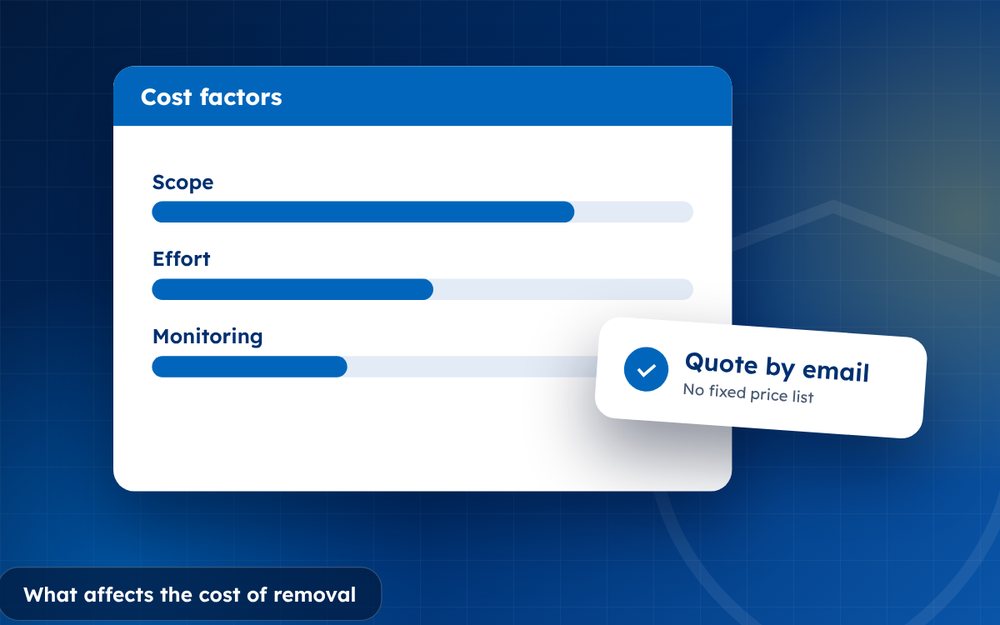
How Much Does Review or Content Removal Cost?
How much does review or content removal cost? What drives the price, how providers charge and questions to ask before hiring.
Read the guide · 3 min
How to Choose a Reputation Management Company
How to choose a reputation management company: what to check, questions to ask, red flags and what ethical providers do.
Read the guide · 3 min
Is Online Reputation Management Worth It?
Is online reputation management worth it? Honest factors to weigh, when it pays off and when you can handle things yourself.
Read the guide · 3 min