
Pirated courses spread through Telegram channels and torrent indexes, often within days of launch. Both can be reported, and a steady routine keeps the damage down.
Course piracy usually starts with one buyer sharing the files or login. From there, channels and torrent sites copy and reshare them, often for free or for a small fee. Each copy takes sales from you, and the longer it sits online the more it spreads.
You own the copyright to your course materials, which gives you a clear route: formal notices to the services and hosts involved, plus search removal.
Piracy often moves in layers: a copy appears on a channel, is reposted to torrent indexes, then is picked up by search engines. Working on each layer in the same week stops the content from simply reappearing somewhere else.
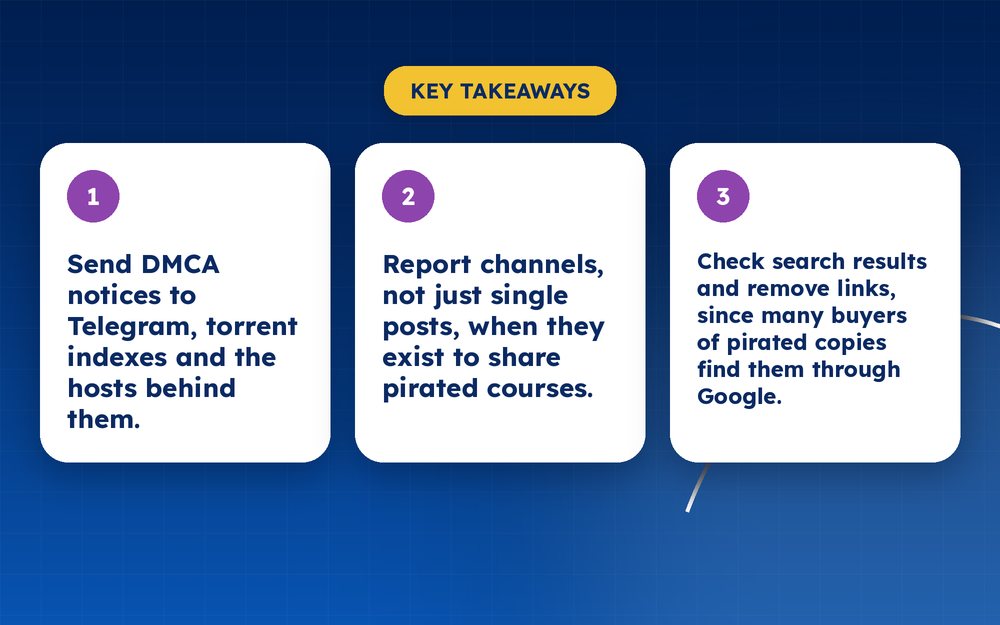
- Send DMCA notices to Telegram, torrent indexes and the hosts behind them.
- Report channels, not just single posts, when they exist to share pirated courses.
- Check search results and remove links, since many buyers of pirated copies find them through Google.
How to remove it, step by step
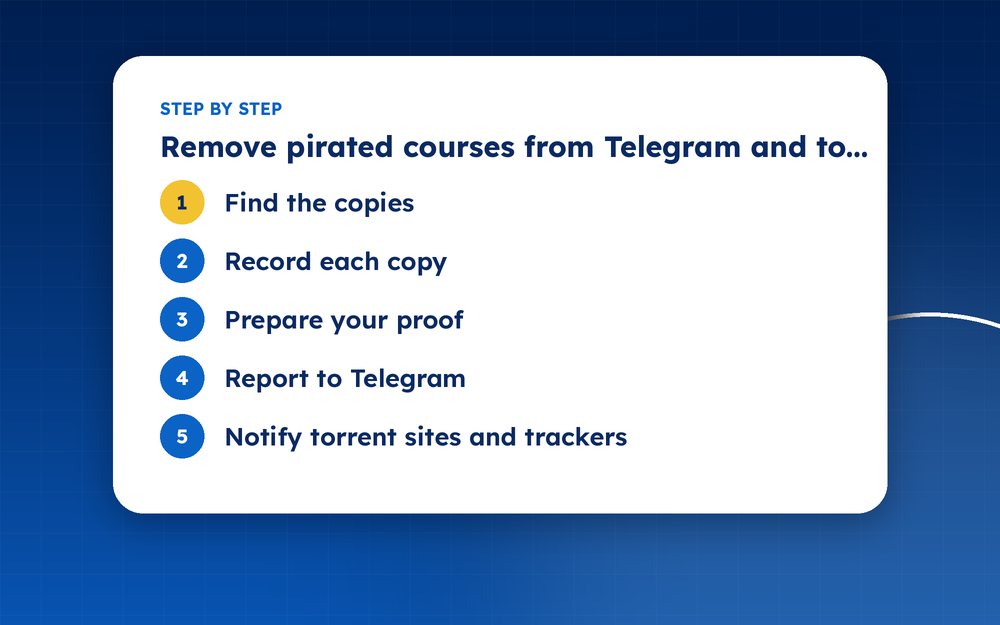
- Find the copiesSearch channel names, course titles, your name and the platform you sell on, in search and in public channels. A helper or service can do this for you. Search your course title, your name and distinctive lesson names on Telegram and on torrent search pages. Ask a trusted student to help if you do not want to look yourself.
- Record each copySave links, channel names and screenshots with dates. Save the channel links, message links, file names, dates and screenshots. Put each in a spreadsheet so notices are quick to write.
- Prepare your proofHave links to your original course, and details that show you own it. Collect original files, sales pages with dates and your terms. These show you own the course.
- Report to TelegramUse the in-app report, and email the abuse contact with exact links and a copyright statement. Use Telegram's copyright reporting route with exact links and proof. Report the channel and the individual messages.
- Notify torrent sites and trackersUse their contact or DMCA pages, and notify their hosts if there is no reply. Torrent indexes and trackers often have contact or abuse pages. Send complete notices with the torrent links and your proof.
- Ask search engines to remove linksSubmit copyright removal requests for each page. Submit the pages that list or link to the copies, so people stop finding them through search.
- Monitor weeklyNew copies appear often. Re-check and re-report. Search weekly for a few months. New copies often appear within days of a removal.
How pirated courses spread
Buyers share files in groups, and resellers repackage courses as bundles. Telegram channels advertise "free courses" to build audiences, and torrent indexes list the same files with new names. Treat them as a network, not as separate problems.
Writing a strong notice
Name your course, give the link to the original, list the infringing links, state that you own the rights and that the use is unauthorised and give your contact details. Keep the tone factual. Short, accurate notices are processed faster.
Reducing future piracy
Consider watermarking videos with buyer identifiers, limiting downloads, using expiring links and adding a clear piracy notice in your terms. These measures do not stop all piracy, but they make leaks easier to trace and less attractive to share.
Looking at the business side
Some pirates would never have bought your course, so not every pirated copy is a lost sale. Focus your effort on the copies that rank well in search and the channels that advertise to your target buyers.
What a typical case looks like
A teacher finds her course on two Telegram channels and four torrent pages. She records each link, reports the channels and messages, and emails the torrent sites with her proof. Telegram removes both channels within a week and three torrent pages disappear. She submits the remaining links to search engines, and sets a weekly reminder. Two new copies appear the next month and she deals with them in an hour.
Her saved evidence made the second round fast.
Common mistakes to avoid
Do not join channels with your personal account. Do not download torrents on your own devices. Do not argue with channel owners. And do not stop after the first removal.
How a specialist can help
Course piracy is high-volume and repetitive. A specialist team can run sweeps, send notices and monitor, so you can focus on teaching and selling. We cannot promise every copy will disappear, but we will be honest about what is realistic. Email us in confidence.
Frequently asked questions
Can pirated courses be removed from Telegram?
Often yes. Telegram acts on copyright reports with clear links and proof, though new channels can appear.
What about torrent sites?
Some respond to notices, others do not. Notices to hosts and search engines can still reduce visibility.
Will the copies come back?
Often, so monitoring matters.
Should I join the channels?
It is often better to avoid it. Ask someone else to capture evidence, or use screenshots from students.
Can I find out who uploaded the course?
Sometimes your platform data can show which account was used. Apply your terms to that buyer.
Is this legal advice?
No. It is general information. For claims or court action, speak to a qualified lawyer.
Need help with this?
Every situation is different. Email us the details in confidence and we will reply with an honest assessment of what can be done.
Contact us by email Piracy monitoringThis guide is general information, not legal advice. DMCA Reputation is not a law firm.
Related guides
How to Find Out Where Your Online Course Has Been Leaked
How to find out where your online course has been leaked: search methods, monitoring tools, where leaks appear and how to record what you find for takedowns.
Read the guide · 4 min
How to Stop Course Sharing Inside Your Membership Community
How to stop course sharing inside your membership community: set clear rules, use access controls and watermarks, handle offenders and keep your community healthy.
Read the guide · 3 min
How to Send a DMCA Takedown Notice (With Template)
How to send a DMCA takedown notice: what to include, who to send it to, a free template, counter-notices and common mistakes.
Read the guide · 5 min