
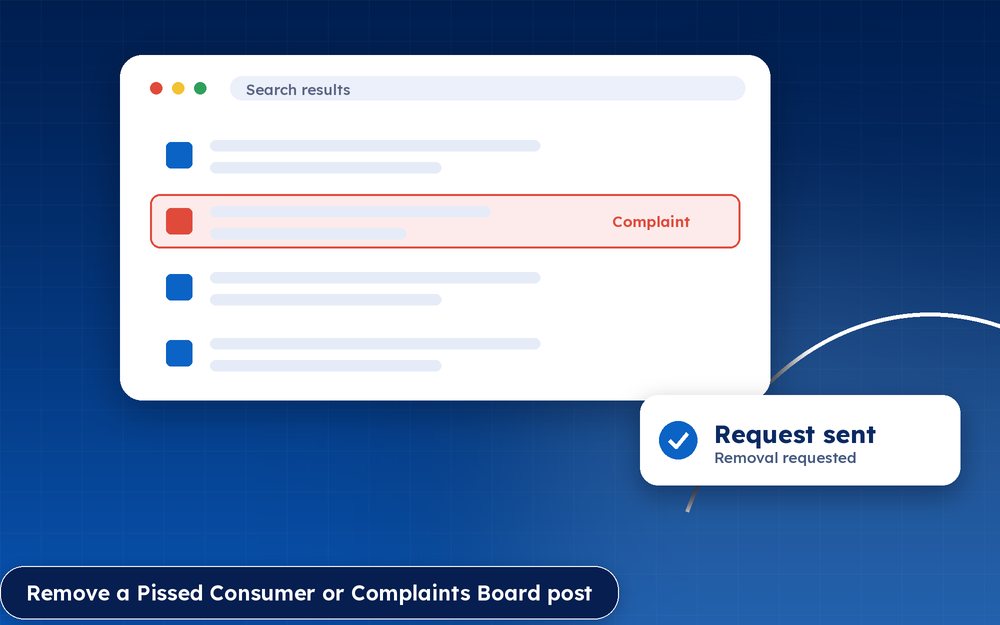
Complaint sites rank well in search, so a single post can follow a business for years. The best results come from resolving the underlying issue and using the site's own processes.
Complaint sites let users post grievances about businesses and usually let businesses respond. Many have terms that allow removal when a complaint is resolved or when it breaks the site's rules, but policies differ and change. Read the current rules for the site you face.
Some of these sites also offer paid services to businesses. Be careful to understand what those services do and do not do before agreeing.
Many complaint boards allow the poster to update or withdraw their post, and some allow businesses to respond. That is usually the quickest route, so approach the complainant respectfully.
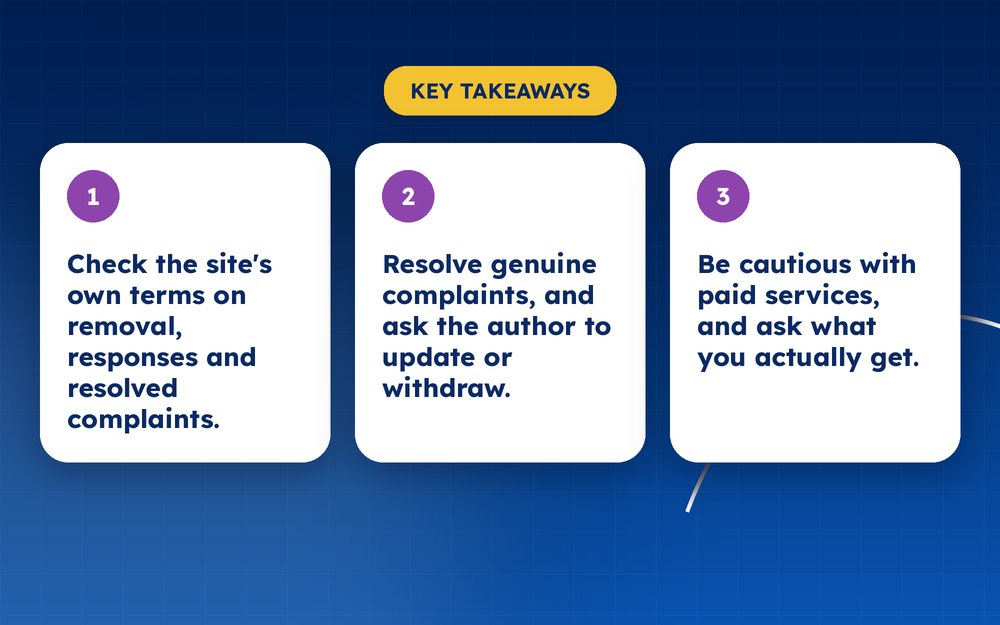
- Check the site's own terms on removal, responses and resolved complaints.
- Resolve genuine complaints, and ask the author to update or withdraw.
- Be cautious with paid services, and ask what you actually get.
What to do, step by step
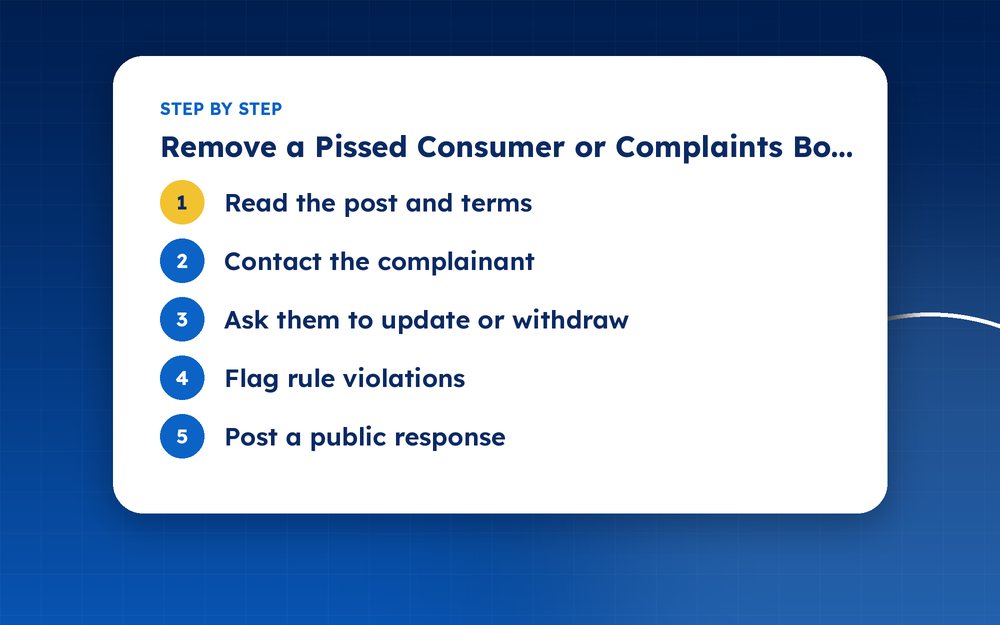
- Read the post and termsIdentify what was said and what the site's rules allow. Read the post and the site's terms. Note what is claimed and what rules apply.
- Contact the complainantIf the issue is real, offer a fair resolution. If the complaint is real, contact the customer and try to resolve it. A quick, polite offer of help can change their view.
- Ask them to update or withdrawSome sites let authors remove or amend posts after resolution. Ask whether they would update the post or withdraw it once the matter is settled. Do not pressure or offer inducements that break rules.
- Flag rule violationsUse the site's report process for fake posts, personal data or abusive content. If the post breaks the site's rules, such as personal information or false claims, report it with evidence.
- Post a public responseRespond calmly, with facts and an offer to help. Post a short public reply, thanking the complainant and stating what you did to resolve it.
- Consider legal adviceFor false statements of fact, a lawyer can explain options. For false and damaging claims, a lawyer can advise on options.
- Manage search resultsBuild positive content and monitor how the page ranks. Publish accurate content and gather reviews so the post does not dominate results.
When removal is realistic
Removal is more realistic when a complaint breaks the site's rules, is fake, contains private information or is withdrawn by the author. It is less realistic when the complaint is an honest account the site wants to keep.
Understanding paid programs
Some sites sell business tools, such as response features, reputation badges or advertising. These may not remove posts. Read the terms and ask the provider to confirm in writing what happens to the posts, to avoid disappointment.
Search engine routes
Search engines can remove links in limited cases, such as legal removals or personal information. They usually do not remove pages just because they are negative. Check their policies before applying.
Using the complaint to improve
If the complaint highlights a real problem, fixing it benefits your business. Update your processes and share the improvement in your reply.
What a typical case looks like
A shop receives a complaint about a delayed order. The owner calls the customer, refunds the shipping and apologises. The customer updates the post to say the issue was resolved. The shop also publishes a short note about delivery times on its site. The post remains, but readers see the update and the owner's reply.
Resolving the matter did more than arguing about it.
Common mistakes to avoid
Do not post fake positive reviews. Do not threaten the author. Do not pay without clear terms. And do not ignore the post.
How a specialist can help
A specialist team can assess the post, prepare a response, contact the site and work on search visibility. We cannot promise removal, but we will be honest about what is realistic. Email us in confidence.
Frequently asked questions
Can I remove a post from a complaints board?
Sometimes, if the poster withdraws it or it breaks site rules. Many posts stay.
Should I contact the customer?
Yes, if the complaint is real. A polite, quick response often helps.
Can I offer something to get it removed?
Be careful. Inducements may break site rules or the law.
What if the post is false?
Report it with evidence and consider legal advice for serious cases.
How do I reduce its impact?
Reply publicly and build positive content.
Is this legal advice?
No. It is general information. For claims or court action, speak to a qualified lawyer.
Need help with this?
Every situation is different. Email us the details in confidence and we will reply with an honest assessment of what can be done.
Contact us by email Negative content removalThis guide is general information, not legal advice. DMCA Reputation is not a law firm.
Related guides
How to Respond to a Better Business Bureau Complaint
How to respond to a Better Business Bureau complaint: deadlines, what to write, how to resolve it, when a complaint may be removed and how to protect your rating.
Read the guide · 4 min
How to Remove a Negative Review From G2 or Capterra
How to remove a negative review from G2 or Capterra: guidelines, how to report, how to respond professionally and how to encourage balanced, verified reviews.
Read the guide · 3 min
How to Remove a Defamatory Website or Blog Post About You
How to remove a defamatory website or blog post about you: evidence, host and platform complaints, legal routes and search suppression.
Read the guide · 4 min