
Some removal providers charge only when content is removed. It can be a fair model, but the details matter: what counts as removal, how it is verified and what happens when content returns.
In a pay-on-removal model, the provider is paid for confirmed results instead of for effort. This can align incentives, but it can also create disputes if terms are vague.
Before agreeing, get the terms in writing and make sure you understand what happens in different situations. This is general information, not legal advice.
No payment model is automatically fair or unfair. What matters is whether you understand it before you agree. Ask for the terms to be written plainly, and check how the provider defines success, because that definition drives how the model works in practice.
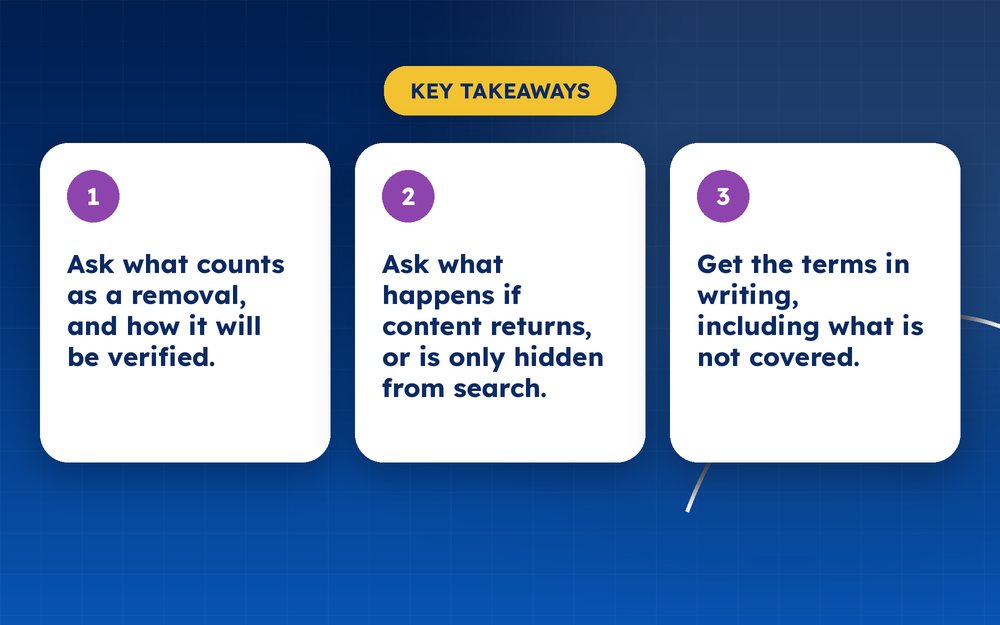
- Ask what counts as a removal, and how it will be verified.
- Ask what happens if content returns, or is only hidden from search.
- Get the terms in writing, including what is not covered.
What to ask, step by step
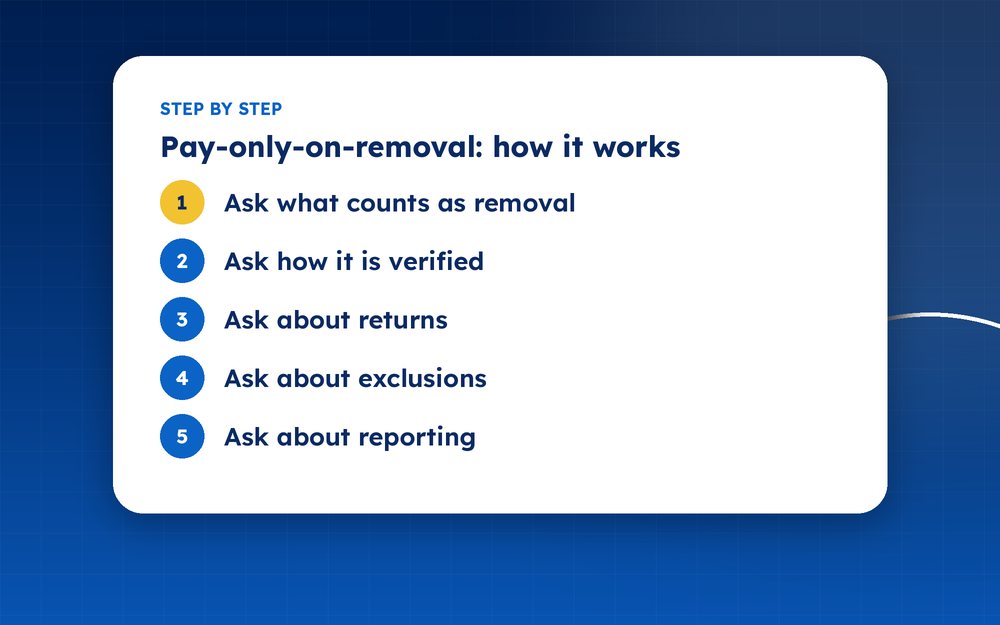
- Ask what counts as removalIs it deleted from the site, removed from search or both? Some providers count a removal only when the page is deleted by the site. Others count removal from search results, or a hidden listing. Ask which, and ask for examples.
- Ask how it is verifiedHow will you see proof, such as before and after evidence? Ask how you will see proof, such as the original link, a dated screenshot of the page before, and a record that it is gone. You should not have to take their word for it.
- Ask about returnsWhat happens if the content comes back? Content can reappear. Ask whether the provider will remove it again, for how long and whether this costs extra. This matters for sites that repost.
- Ask about exclusionsWhich sites or cases are not covered? Ask which sites, content types or countries are excluded, and whether any cases are refused. Honest providers say no to some cases.
- Ask about reportingHow often will you receive updates? Ask how often you will get updates and in what form. A short regular report is better than silence followed by a bill.
- Ask about confidentialityHow is your information handled? Ask where your information is stored, who can see it and when it is deleted. This is covered in more detail in our guide on sharing ID and evidence.
- Get it in writingReview the agreement before agreeing. Read the agreement before you agree. If something is unclear, ask for it to be changed or explained in writing.
Why the model appeals
You pay for results, not for attempts. It can reduce the risk of paying for work that does not succeed, especially for hard cases.
Where problems can arise
Vague definitions of removal, hidden fees and disputes over verification can cause friction. Ask for clear examples of what is counted.
Comparing with other models
Other models include monthly retainers and fixed fees. Each has trade-offs. Choose the one that suits your case and risk tolerance.
Red flags
Be careful with providers that guarantee outcomes, refuse to explain methods, ask for passwords or push you to decide quickly.
What a typical case looks like
A business owner has twelve links to copied content. One provider offers payment per confirmed removal. Before agreeing, she asks what counts as removal, how it is proven and what happens if a page returns. The provider explains that removal means the page is deleted or no longer appears in search, shows before and after evidence and will repeat removal for sixty days. She also asks which of her links are unlikely to succeed. The provider says two are on sites that never respond, and agrees not to charge for those unless removed.
Her questions did not make the provider unwilling. They made the arrangement clear.
Common mistakes to avoid
Do not agree without reading terms. Do not assume every case is covered. Do not share more information than needed. And do not skip questions.
How a specialist can help
If you would like to understand how we work and what to expect, email us in confidence. We will explain the process and what is realistic, without pressure.
Frequently asked questions
Is pay-on-removal better than a monthly fee?
It can suit cases with clear targets, because you pay for results. Monthly fees can suit ongoing monitoring. The right choice depends on your case and on the terms.
What happens if content returns?
Ask the provider how re-posting is handled, for how long and at what cost. Some include repeat removal for a period, and others treat it as a new case.
Are all removals covered?
Not always. Providers may exclude certain sites or content types. Ask for exclusions in writing.
Do I pay if nothing is removed?
That is the idea of the model, but check the terms for any setup, administration or monitoring charges.
Can I see proof of removal?
You should ask for it. Before and after evidence with dates is a reasonable request.
Is this legal advice?
No. It is general information. For contract questions, speak to a qualified lawyer.
Need help with this?
Every situation is different. Email us the details in confidence and we will reply with an honest assessment of what can be done.
Contact us by email How it worksThis guide is general information, not legal advice. DMCA Reputation is not a law firm.
Related guides
Can Anyone Guarantee Content Removal?
Can anyone guarantee content removal? Why honest providers cannot promise outcomes, what they can commit to, and how to spot unrealistic claims.
Read the guide · 4 min
Is It Safe to Send ID and Evidence to a Removal Company?
Is it safe to send ID and evidence to a removal company? What data is needed, how to limit what you share, what to ask about storage and when to say no.
Read the guide · 4 min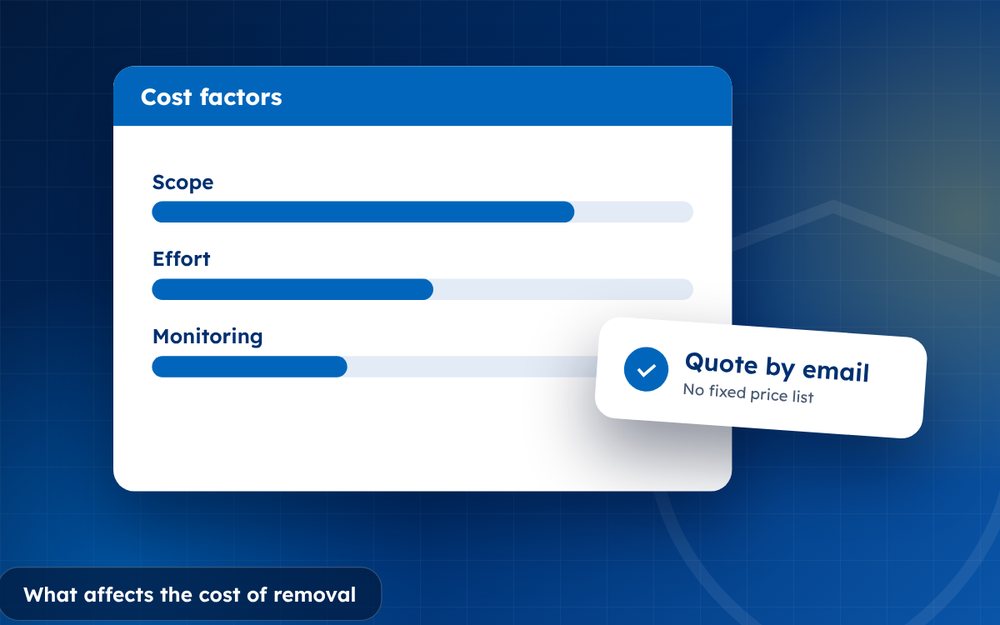
How Much Does Review or Content Removal Cost?
How much does review or content removal cost? What drives the price, how providers charge and questions to ask before hiring.
Read the guide · 3 min