
Businesses in the UK and Ireland sometimes ask whether they can take legal action over a false review. The answer can be yes, but it is a legal question for a solicitor. Here is the general picture.
This page is general information, not legal advice. Defamation law differs between England and Wales, Scotland, Northern Ireland and Ireland, and it changes. Always check with a qualified solicitor about your case.
In broad terms, a false statement of fact that harms reputation can be defamatory, but opinion and honest criticism are treated differently. Thresholds for serious harm, time limits and costs can make legal action a big step.
Defamation rules in the UK and Ireland differ from each other and from other countries, and time limits can be short. Treat this as a starting point and speak to a solicitor in the right jurisdiction.
- A false statement of fact may be actionable. Opinion generally is not.
- You may need to identify an anonymous reviewer, which usually needs a court process.
- Reports to Google and well-handled replies are often faster and cheaper.
How to think about it, step by step
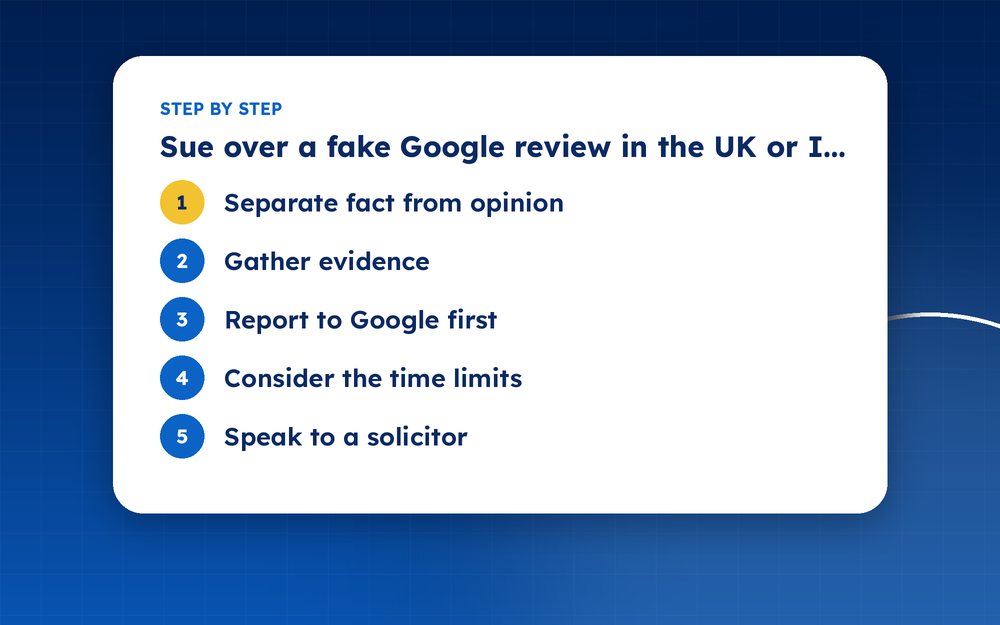
- Separate fact from opinionNote which statements are checkable facts and which are views. Write down which statements are claims of fact and which are opinions. Facts can be proved false, while opinions are harder to challenge.
- Gather evidenceSave the review, screenshots and proof that statements are false, such as records. Save the review, dates, and proof that the statements are false, such as records. Capture how the review has affected you.
- Report to Google firstIf the review breaks policy, a report is faster and cheaper. Report the review to Google first. It is quick and cheap, and a removal may solve the problem.
- Consider the time limitsDefamation claims have strict time limits, so do not wait. Defamation claims often have short time limits. Note when the review was posted and speak to a solicitor early.
- Speak to a solicitorAsk about serious harm, costs, anonymous reviewers and chances of success. A solicitor can explain the law in your location, the costs, the risk and whether a claim is proportionate.
- Consider a letter before actionA formal letter can sometimes lead to removal or a response. Before a claim, a formal letter may be used. This is a legal step with consequences, so it should be done with advice.
- Keep protecting your reputationContinue with genuine reviews and calm replies. Keep replying politely and building genuine reviews while you decide.
Anonymous reviewers
If the reviewer is anonymous, you may need a court order to require the platform to release details. That is a legal process with costs and no guarantee. A solicitor can explain how it works in your jurisdiction.
Cost and proportion
Legal action can be expensive and slow, and a case may attract more attention than the review. Many businesses decide to report, reply and build reviews instead, and keep legal action for serious, damaging cases.
What removal services can do
A removal service can prepare reports, gather evidence and follow up with the platform. This does not replace legal advice. If you want to explore a claim, speak to a solicitor, and you can contact us if you would like a recommendation.
Reviews and the law more generally
Consumer protection rules also address fake reviews, and regulators have powers over fake review practices. In some cases, reporting to a regulator can be an option.
What a typical case looks like
A small business owner in England finds a review accusing her of fraud, which she can disprove. She saves evidence, reports the review to Google and, when it is not removed, speaks to a solicitor. The solicitor explains the cost and risk, and advises a letter. The reviewer removes the review after receiving the letter.
The report and the advice together led to a quicker result than a lawsuit.
Common mistakes to avoid
Do not threaten claims without advice. Do not wait until time limits pass. Do not post angry replies that create new problems. And do not assume that a negative review is defamatory.
How a specialist can help
A specialist team can prepare policy-based reports and organise evidence that a solicitor may need later. We are not a law firm and cannot give legal advice. Email us in confidence.
Frequently asked questions
Can I sue over a fake review in the UK or Ireland?
Possibly, if the review contains false factual statements that cause serious harm. A solicitor can advise.
Is there a time limit?
Yes, and it can be short. Speak to a solicitor early.
Should I report to Google first?
Yes. It is cheap and may solve the problem.
Can I find out who wrote the review?
Possibly through a court process, which is costly.
Is a letter before action wise?
Only with advice, because it can have consequences.
Is this legal advice?
No. It is general information, and laws differ by place. For claims or court action, speak to a qualified lawyer.
Need help with this?
Every situation is different. Email us the details in confidence and we will reply with an honest assessment of what can be done.
Contact us by email Google review removalThis guide is general information, not legal advice. DMCA Reputation is not a law firm.
Related guides
Section 230 and Fake Reviews: What US Businesses Can Do
Section 230 and fake reviews: why platforms are rarely liable, what US businesses can do instead, reporting routes, consumer laws and options against the reviewer.
Read the guide · 4 min
Can You Sue Over a Fake Review in Canada? Anti-SLAPP Explained
Can you sue over a fake review in Canada? A general explanation of defamation, anti-SLAPP laws, risks of weak claims and cheaper options. Not legal advice.
Read the guide · 4 min
How to Remove a Google Review: A Complete Guide for Business Owners
How to remove a Google review: what Google will remove, how to report it, how to appeal and what to do if it stays. A guide for business owners.
Read the guide · 6 min