
Many adult creators work under a stage name and want to keep their real identity private. A few habits make it much harder for people to connect the two, and make leaks easier to deal with.
Identity leaks often come from small slips: a reused username, a background detail, a payment record or a tagged photo. Fixing them early is easier than cleaning up later.
This guide covers practical steps. It cannot make you impossible to identify, and your risks depend on who you are worried about, so adapt the steps to your situation.
Privacy is a set of habits, not a single setting. The goal is to make it hard for a casual viewer to link your stage name to your real name, address and family.
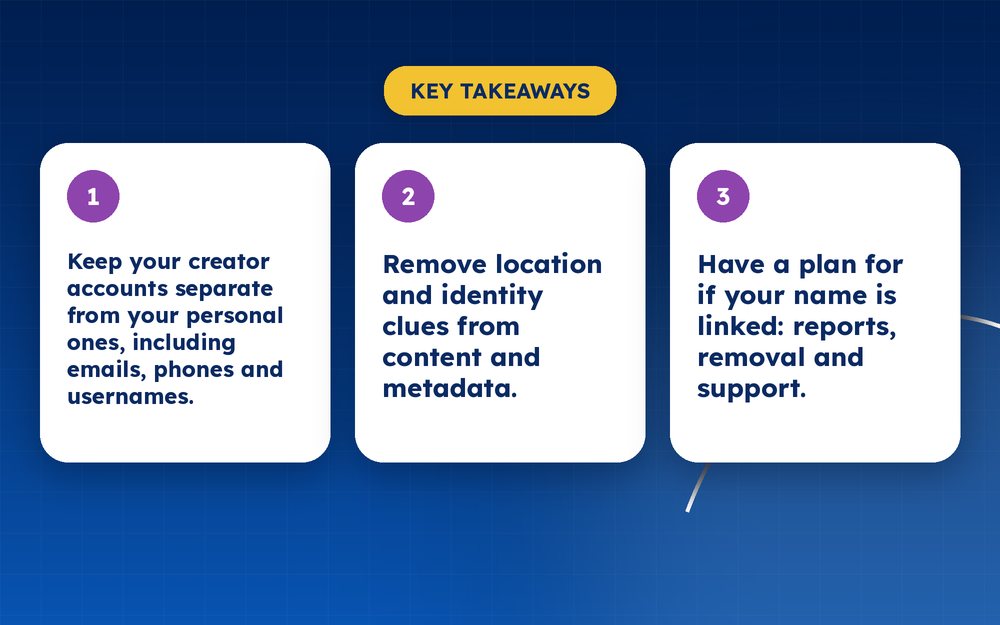
- Keep your creator accounts separate from your personal ones, including emails, phones and usernames.
- Remove location and identity clues from content and metadata.
- Have a plan for if your name is linked: reports, removal and support.
Practical steps
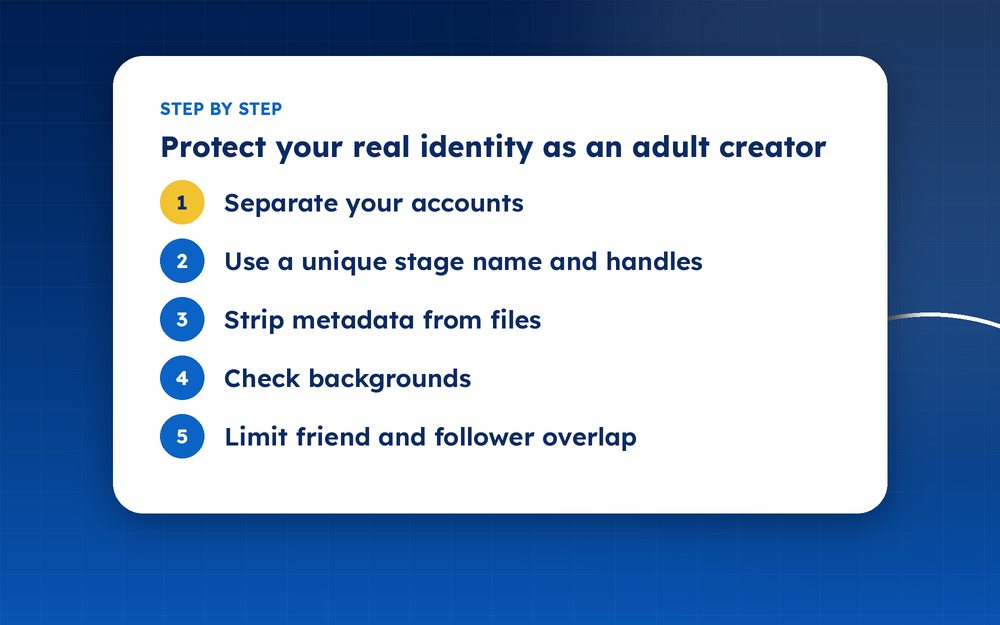
- Separate your accountsUse a dedicated email, phone number and password manager for your creator work. Use separate emails, phone numbers and devices for work, and keep them off your personal accounts.
- Use a unique stage name and handlesDo not reuse usernames from personal accounts. Choose a stage name and handles that are not linked to your real name or earlier accounts. Check that they do not appear in your old posts.
- Strip metadata from filesRemove location and device data from photos and videos before sharing. Strip location data and other details from photos and videos before posting, using an editing or metadata tool.
- Check backgroundsAvoid visible addresses, landmarks, mail, windows with views and recognisable items. Look at windows, mail, uniforms, reflections and landmarks in your photos and videos. Small details can reveal where you are.
- Limit friend and follower overlapKeep personal social accounts private and avoid linking them. Reduce overlaps between your work followers and personal friends, and avoid following the same accounts.
- Review payment and legal detailsUnderstand what name and address appear on payouts and tax records, and use proper business arrangements where you can. Review how you are paid, how your business is registered and what public records show. Ask for advice if needed.
- Prepare for exposureKnow how to report doxxing, remove pages and talk to people if you are outed. Plan what you would do if you were identified, including who to tell and how to remove personal data.
The most common leaks
Reused usernames, reverse image search of face photos, and friends who recognise your voice or tattoos are common routes. You can reduce them by keeping separate handles, limiting public photos of your face in non-work accounts and using distinctive features carefully.
If your name is linked to your content
Save evidence, report the pages as doxxing or harassment, and ask search engines to remove links that connect your name to explicit content where policies allow. Consider whether to tell family or employers on your own terms, and ask for privacy.
Looking after your wellbeing
Worrying about exposure takes a toll. Speak to peers or support groups for creators, and consider counselling if you feel stressed. Good habits reduce risk, but they cannot remove it entirely.
What a typical case looks like
A creator uses a new email, phone number and handle for her work and removes location data from her photos. After a few months, a follower tries to link her accounts, but she has no overlap in followers or details. A reverse image search finds only her work photos. When a fan asks where she lives, she does not answer.
Her routine of small habits prevented a small mistake from becoming exposure.
Common mistakes to avoid
Do not post photos with metadata. Do not link your accounts together publicly. Do not use real documents in public listings. And do not share details with people you do not trust.
How a specialist can help
If your identity is exposed, a specialist team can handle removal, search clean-up and monitoring. We cannot promise that every trace will be removed, but we will be honest about what is realistic. Email us in confidence.
Frequently asked questions
Can I stay fully anonymous?
It is hard, but you can make identification much less likely with habits and separation.
What is metadata?
Hidden information in files, such as location and device details. Remove it before posting.
What if someone identifies me?
Report doxxing, remove personal data and tell people you trust.
Should I use a VPN?
It can help, but it is only one part of privacy.
How can I check my exposure?
Search your real name and handles, and ask a trusted person to try to link them.
Is this legal advice?
No. It is general information. For claims or court action, speak to a qualified lawyer.
Need help with this?
Every situation is different. Email us the details in confidence and we will reply with an honest assessment of what can be done.
Contact us by email OnlyFans leak removalThis guide is general information, not legal advice. DMCA Reputation is not a law firm.
Related guides
Why Leaked Content Keeps Coming Back and How to Stop It
Why leaked content keeps coming back and how to stop it: mirrors, re-uploads, search results, fingerprinting tools and a realistic monitoring routine for creators.
Read the guide · 4 min
Leak Removal Service or DIY: How Creators Decide
Leak removal service or DIY? How creators decide: time, emotional cost, volume, skills needed, what a service can and cannot do and questions to ask before hiring.
Read the guide · 4 min
How to Remove OnlyFans Leaks From Google and Websites
How to remove OnlyFans leaks from Google and websites: DMCA notices, search removal, platform reports and monitoring for creators.
Read the guide · 4 min